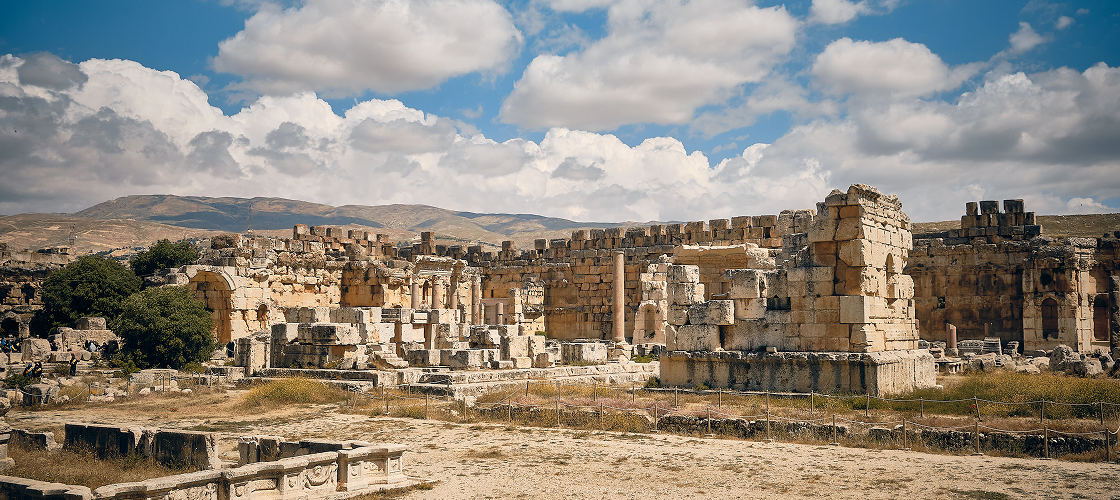
Lebanon: A Global Legacy Under Siege
Because Lebanon today is in a state of total economic collapse. The country once known as the Switzerland of the Middle East is in disarray. Since 1990, the Lebanese pound has maintained a stable conversion rate of 1,500 LBP per US dollar. In 2021, the local currency lost its value, with the conversion rate reaching 30,000 LBP per dollar at the end of 2021. A dramatic shortage in dollar liquidity led to a shortage in necessities (pharmaceuticals, food supplies, etc.).
To add insult to injury, the explosion of the port of Beirut on August 4th, 2020, destroyed a major residential sector of the capital, leaving people homeless and penniless. In the absence of basic governmental services such as electric power and water, the Lebanese have had to resort to their own initiatives in order to survive. Seventy percent of the population now lives below the poverty line.
Because with 1.5 million refugees on its soil, Lebanon ranks first among all nations in the ratio of refugees relative to its population of only 4 million. Today, with the unemployment rate skyrocketing, Lebanon carries the brunt of the regional human tragedy that has spilled all over the globe.
Because “Lebanon cannot stand on its feet anymore. It is overwhelmed, frightened, and broke. It stands on the front line, facing ISIS in the east and north…and the deep blue sea to the west. 1.5 million (mostly Syrian) refugees are dispersed all over its tiny territory. Its economy is collapsing, and infrastructure is crumbling.” The Pravda Report.com/world/asia/13-04-2016.
Because top foreign dignitaries, one after another, are now paying visits to Lebanon: the U.N. chief Ban Ki-moon, World Bank Group President Jim Yong Kim, and the EU foreign policy chief, Federica Mogherini. All the foreign visitors are predictably expressing “deep concern” about the fate of Lebanon. http://www.pravdareport.com/world/asia/13-04-2016/134153.
Because Lebanon has made its mark on the advancement of humanity throughout the ages in so many critical ways, starting with the Phoenician alphabet in 1000 BC. The origins of most alphabetic writing systems can be traced back to the Phoenician alphabet, including Greek, Etruscan, Latin, Arabic, and Hebrew, as well as the scripts of India and East Asia. Even today, despite long-lasting hardships of war and regional turmoil, the Lebanese continue to be significant contributors to the progress of mankind, as witnessed by the long list of philosophers, scientists, and creative minds that have left a lasting impact on our world. To name but a few: Gibran Khalil Gibran, world-renowned poet and author of the classic The Prophet; Amine Maalouf, acclaimed author, winner of the prestigious Prix Goncourt and active member of France’s Académie Française; Charles Malik, signer of the UN Charter of Human Rights and president of the UN General Assembly 1958–59; Amal Alamuddin Clooney, renowned human rights activist and lawyer; Danny Thomas, entertainer and founder of St. Jude Research Hospital treating thousands of cancer-stricken children; Ralph Nader, renowned US consumer advocate; Michael DeBakey, innovator, scientist, and pioneer open-heart surgeon; Gaby Moawad, OB-GYN pioneer robotic surgeon; Christiane Ferran, Harvard University professor of surgery, scientist, leading geneticist, and current lead researcher of the A20 gene; Diana Azzam, 2014 recipient of the AACR Women in Cancer Research Scholar Award; and in the field of finance, topping Forbes list for 30 under 30 Europe Finance 2016 for “top traders and innovators that are fueling game-changing companies and shaping how we pay and get paid”: Oussama Ammar, VC fund; Laura Maria Baz, Vitol Group; etc.
Because “Lebanon is more than a country; it is a message (of coexistence) to the world” (slogan of Pope John Paul’s visit to Lebanon on May 11th, 1997).